
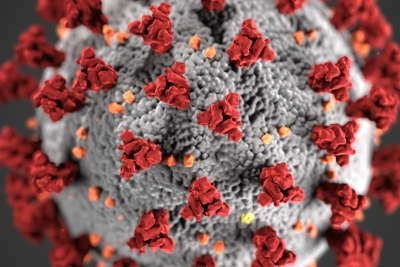
Omicron COVID-19 variant discovered in three counties across Washington

The Washington State Department of Health (DOH), in partnership with the UW Medicine Virology Lab, has confirmed a total of three cases of omicron variant found in Thurston County, Pierce County, and King County. The patients range in age from 20 to 39, two men, one woman.

The patients are:

  • a man in his thirties from Thurston County,
  • a man in his twenties from Pierce County, and
  • a woman in her twenties from King County.

Confirmation came in midday Saturday, and patients are still being informed. Details about their conditions are unknown to DOH. Samples were collected between Nov. 29 and Dec. 1 and confirmed at an in-state lab.

This is early in the investigation, DOH does not believe the cases are related, but the travel history of the patients is unknown.

Little is known clinically about the omicron variant at this time. Researchers are working to learn more about it, but it was found here quickly thanks to increased surveillance efforts; lab specialists have been looking for omicron through PCR testing and genomic sequencing. The state also increased its lab capacity to detect genetic markers associated with new and existing variants.

Sequencing has been prioritized for anyone with travel history or close contact with a confirmed case. Case investigation and contact tracing among those at higher risk for contracting and spreading omicron has been prioritized. Travelers who have been to a country or state with omicron, or anyone identified as a close contact, receives that prioritization.

“We knew that it was a matter of time before omicron was sequenced in our state and so we were anticipating this very news,” said Umair A. Shah, MD, MPH, Secretary of Health. “We strongly urge people to get vaccinated and get their boosters as soon as possible to maximize their level of protection from any variant.”

The best protection from this variant and others comes from getting vaccinated and getting boosters as soon as possible. This is especially important for children and adults with chronic conditions that place them at higher risk for severe disease from COVID-19.

“Even with a highly mutated virus like omicron, we are not going back to square one of the pandemic,” said Dr. Jeff Duchin, Health Officer, Public Health – Seattle & King County. “Omicron may pose new challenges that we will need to respond to, but compared to the early days of the pandemic, we know much more about COVID-19, and we’re better prepared for it. We know layered protections work together to maximally reduce risk, and that will continue to be the case for delta and for omicron if that becomes a dominant strain circulating in our community.”

“If there is room for improvement in how we are using our current tools and strategies, this is a good time to make those improvements, especially vaccination and booster doses when eligible, good-quality masks indoors, improving indoor air quality and avoiding crowded indoor spaces along with other COVID-19 prevention measures,” Duchin said.

“We suspected that the omicron variant was circulating in our region, and now our laboratory has confirmed the first three cases in Washington state by viral genome sequencing in the last 24 hours. Throughout the pandemic, it’s been a huge team effort by the UW Medicine Virology Laboratory, requiring development and implementation of several diagnostic and sequencing assays to detect and confirm the variety of COVID-19 variants that have surfaced in Washington state,” said Dr. Geoffrey Baird, chair of Laboratory Medicine and Pathology at UW Medicine. To date, the laboratory has tested approximately 3.8 million COVID-19 samples.

142,000 New Child COVID Cases This Week

As of November 18, almost 6.8 million children have tested positive for COVID-19 since the onset of the pandemic. This week nearly 142,000 child cases were added, an increase of about 32% from two weeks ago. Child cases have declined since a peak of 252,000 the week of September 2nd, but COVID cases among children remain extremely high. For the 15th week in a row child COVID-19 cases are above 100,000. Since the first week of September, there have been over 1.7 million additional child cases.

The age distribution of reported COVID-19 cases was provided on the health department websites of 49 states, New York City, the District of Columbia, Puerto Rico, and Guam. Since the pandemic began, children represented 16.9% of total cumulated cases. For the week ending November 18, children were 25.1% of reported weekly COVID-19 cases (children, under age 18, make up 22.2% of the US population).

A smaller subset of states reported on hospitalizations and mortality by age; the available data indicate that COVID-19-associated hospitalization and death is uncommon in children.

At this time, it appears that severe illness due to COVID-19 is uncommon among children. However, there is an urgent need to collect more data on longer-term impacts of the pandemic on children, including ways the virus may harm the long-term physical health of infected children, as well as its emotional and mental health effects.

Read the full article from the American Academy of Pediatrics. 

The Pandemic’s Impact on Children: COVID Vaccinations & Mental Health

Children’s health care professionals in the US have declared a national state of emergency in child and adolescent mental health. The ongoing stress, fear, grief, disruption of schooling and uncertainty created by the COVID-19 pandemic has weighed heavily on children and teens, and many are having a tough time coping emotionally.

Read the full article from NIHCM

Tips for a Safer Holiday Season

With Halloween and other holidays fast approaching, the Washington State Department of Health (DOH) wants to remind people about ways to enjoy the holidays while still protecting themselves, their loved ones and their community from the spread of COVID-19.

Tips for a safer holiday season:

  • Get vaccinated to protect yourself and others not yet eligible (such as young children) from COVID-19.
  • Wear a cloth face covering or mask anytime you are with people from outside your household, whether indoors or outside.
    • Make sure face coverings or masks fit snugly and cover your mouth and nose.
    • Even those who are fully vaccinated should wear a mask when indoors or in crowded outdoor spaces.
  • Avoid crowded or confined spaces. Outdoor activities are safer than indoor activities. If you’re inside, make sure to have proper ventilation, and open doors and windows when possible.
  • Watch distance and limit close contact with people outside of your household. Where possible stay six feet apart and keep closer contact brief, especially among people at high risk for severe COVID-19 or are not fully vaccinated.
  • Wash or sanitize your hands (and the hands of little ones) often.
  • Stay home if you are sick or were recently exposed to COVID-19. If you have symptoms or you’ve been identified as a close contact of someone with COVID-19, get tested.
  • If you are planning to travel visit the Center for Disease Control and Prevention’s (CDC) travel page for up-to-date guidance on domestic and international travel and other travel recommendation. CDC still recommends delaying travel until you are fully vaccinated.
  • To learn more about safer ways to celebrate the holidays visit the CDC’s holiday celebrations web page.

“We know that holiday traditions are important to children and families and there are ways that we can enjoy the holidays, while reducing the risk of spreading COVID-19”, said Lacy Fehrenbach, Deputy Secretary for the COVID-19 response. “By using these simple holiday safety tips, we all can have fun and connect with loved ones during the holidays, while protecting the health and well-being of ourselves, our family and friends, and members of the communities where we live.”

 If your Halloween plans include trick or treating, remember these simple safety tips.

  • Stick with members of your own household and distance from others when in crowded indoor and outdoor spaces.
  • Wear a cloth mask and remember: a plastic costume mask is not a suitable substitute.
  • Wash your hands before and after trick-or-treating.
  • Bring plenty of hand sanitizer

If you give out treats:

  • Limit candy to individually wrapped treat bags. This reduces the number of people who would typically touch items in a communal
  • To avoid crowding, place treats on a table in your driveway or yard.
  • Place a few mini pumpkins or other decorations 6 feet apart to signal a line and keep trick- or-treaters distanced while waiting for

For more information on how you can enjoy the holiday season while minimizing the risk of COVID-19, visit the DOH tips for safer gatherings page. Also, remember to check in with your local health jurisdiction as they may have additional guidance or requirements for celebrating Halloween and other holidays safely this year.

Behavioral Health Resources for Back to School

As we see students and educators head back into the classroom and restart the in-person learning routine, the Department of Health (DOH) is providing behavioral health tips and resources for navigating the emotional responses that children, teens, and adults may experience during this exciting and stressful time.

The COVID-19 Back-to-Classroom THINK Toolbox is a resource to help with adjusting to the return of in-person school and learning. THINK, which stands for Teaching with Healthcare Informed Neurological strategies for Kids, is a toolbox with information to help school-age children and teens deal with the emotional impacts of COVID-19, and tips on how to build and maintain resilience and practice self-care during a disaster.

“Children and teens are uniquely affected by the pandemic,” says Dr. Kira Mauseth, co-lead for the behavioral health strike team at the Department of Health. “Children and youth process information differently than adults. They need different structures in place to support them through disasters and large transitions, such as promoting recovery in the classroom, and return to back-to-classroom education. The THINK Toolbox was developed to address these areas and some of the trauma and stress that we’ve all experienced as a result of the pandemic.”

Increased anxiety, acting out, and behavioral regression at home or at school are some of the behavioral health responses that parents, caregivers and teachers are likely to see or encounter in students this fall. Also be aware of “red flag behaviors” such as suicidal thinking or expression (talking about it), violence, and aggression – these behaviors will require more or additional professional support. For children with autism spectrum disorder (ASD), they are twice as likely to experience more intense and more frequent behavior problems during the pandemic.

As schools are now open for in-person learning, ‘back to classroom’ education and recovery for students is also underway. When promoting recovery in the classroom, it is important to remember that some students come from groups that have been more severely impacted by the COVID-19 pandemic.

With this in mind, encouraging and building resilience for students is key! Activities that facilitate cooperation and communication, and helping children and youth develop self-efficacy (their belief in their ability to achieve a goal) are very important aspects for resilience in the classroom. Activities that also provide structure, consistency and the opportunity to contribute should also be strongly emphasized.

“As a parent and a physician, I know that in-person learning is hugely beneficial to children’s overall well-being,” says Umair Shah, MD, MPH, Secretary of Health. “In-person interaction helps ensure equitable access to education for all students. The work we do now to keep them safe will, in the long term, lead to a brighter and healthier future for our kids.”

Teachers, coaches, school staff, mentors, parents, and caregivers are also at risk for additional anxiety right now. For these groups, practicing self-care in the ways that specifically work for them, is the best medicine. More than ever, patience and compassion are required right now.

Additional Resources:

Parents Report More Negative Pandemic Effects on Kids Who Attend School Virtually vs. In-Person

Parents are much more likely to report their kids are experiencing negative effects if they are going to school virtually during the pandemic than if they attend school in person.

The new findings from our KFF Vaccine Monitor underscore the importance of keeping kids in school in person, which means doing it safely with masking for younger children and school staff despite controversies over mask requirements.

Almost half (47%) of parents whose kids attended school virtually or a mix of in-person and virtual during the last school year say they fell behind academically compared with a quarter (26%) of parents whose kids attended all or mostly in person.

46% of parents say their kids attending schools virtually fell behind in their social and emotional development compared with 31% of kids who went to school.

One in five (22%) parents of kids who went to school say their kids experienced mental health or behavioral problems due to COVID, but the number rose to 39% for kids whose school experience was largely through a computer screen.

Analysis of the data showed that how children got their education (in-person or online) explained these differences in academic performance and wellbeing reported by parents, even when accounting for differences in the parent’s income or education or race or whether the schools were public or private.

The findings also reinforce the urgency of getting 12-18 year-olds and then younger children as well as school personnel vaccinated as soon as possible so children can safely return to school where their parents report they experience both better academic and mental health outcomes.

Read the original post here.

Statewide Updated Mask Order Goes Into Effect Monday, Aug. 23

The Washington State Secretary of Health, Umair A. Shah, M.D., MPH, amended Order 20-03 requiring face masks for everyone over five years of age in most public indoor settings regardless of vaccination status. These include places like grocery stores, malls, gyms, and community centers. Masks are strongly recommended in crowded outdoor settings like sporting events, fairs, and concerts where physical distancing is not possible. The updated order goes into effect on Monday, Aug. 23.

The order reflects the recommendations of all 35 local health officers in the state of Washington and recent changes to CDC guidance that all people, regardless of vaccination status, wear masks in indoor public settings, in areas of substantial or high transmission. With the rise of the more infectious Delta variant, every county in Washington is currently categorized as having substantial or high transmission.

Reinstating mask requirements is necessary in addition to increasing vaccinations, to help reduce the spread of COVID-19 in Washington. The health care system is under immense strain, due in part to increased COVID-19 transmission, mostly among unvaccinated people. Between Feb. 1 and Aug. 3, 94.5% of COVID-19 cases who were hospitalized were not fully vaccinated.

“While vaccines are the pathway out of this pandemic, wearing a mask is necessary to stem the current increase in COVID-19 cases, driven by the Delta variant,” said Shah. “I appreciate the efforts of those who are already regularly wearing face coverings in public and urge others to join us in taking this critical step to control the virus. Each of us has a part to play to stop the spread of this disease in our communities.”

There are some exceptions to the indoor mask requirement, including:

  • Children under age five years of age. However, children age two to four years old can wear a mask under close adult supervision.
  • People with a medical or mental health condition or disability that prevents them from wearing a mask
  • Fully vaccinated workers who are working alone or in an area not accessible to the public
  • Athletes who play indoor sports and who are actively engaged in competition or practice (masks are still required on sidelines and in team meetings)
  • Small indoor private gatherings when everyone is vaccinated
  • Children under two years of age should not wear a face covering due to the risk of suffocation

It is important to use and handle masks properly. A mask should fit snugly around both your mouth and nose, and it should not have holes or tears in the fabric. Cloth face coverings should be washed frequently, ideally after each use, and certainly daily. If you are not able to wash it after each use, wash your hands or use alcohol-based hand sanitizer immediately after putting it back on and avoid touching your face.

Roadmap to Recovery Announcement

Statement from Umair A. Shah, MD, MPH, Secretary of Health:

“When we see increased rates of cases and hospitalizations, we need to act fast and do the right thing county-by-county to prevent more serious consequences from COVID-19 in our state. That is why the tough decisions are being made and some counties are being moved back to Phase 2.

There is still time to turn the tide and slow the spread of COVID-19 before it turns into a fourth wave. We need to take these preventative measures over the next few months at least to get numbers going in the right direction again.

We are still in a hopeful time. We’ve made a lot of progress in the last year and we continue to rise to the challenges as a state – not just with life-saving solutions, but with a sense of community and teamwork that has made Washington’s response the best in the country.

We need to focus on lowering disease transmission for the next several months, even though we have increased immunity across the state due to vaccination efforts.

Vaccine is a crucial tool, but it isn’t the only tool, and we don’t have enough yet to rely on it to shore up the virus and keep the majority of us safe from the spread of disease. We’ve administered more than four million vaccines to people in Washington so far, and more than 20% of our state population is fully vaccinated. We’ll keep up this important work of getting people vaccinated, with the goal of reaching a more robust level of community immunity.”

Roadmap to recovery update: All regions staying in Phase 1 for now

January 15, 2021

OLYMPIA – Today, the Washington State Department of Health (DOH) announced that based on Governor Jay Inslee’s Healthy Washington – Roadmap to Recovery plan, all eight (8) regions in Washington will remain in Phase 1 until at least Monday, January 25, 2021.

As outlined in the governor’s COVID-19 plan, regions must meet four metrics in order to move into Phase 2. These metrics provide an overview of current COVID-19 trends and healthcare system readiness in each region. The four metrics are:

  • Decreasing trend of 10% or more in two-week rate of COVID-19 cases per 100k population.
  • Decreasing trend of 10% or more in two-week rate of new COVID-19 hospitalizations.
  • Less than 90% Intensive Care Unit (ICU) occupancy.
  • COVID-19 test positivity of less than 10%.

DOH will reassess all the metrics each week and announce any changes to current phase status every Friday. For more detailed information on where each of the eight regions falls with regards to the four metrics visit the DOH website.